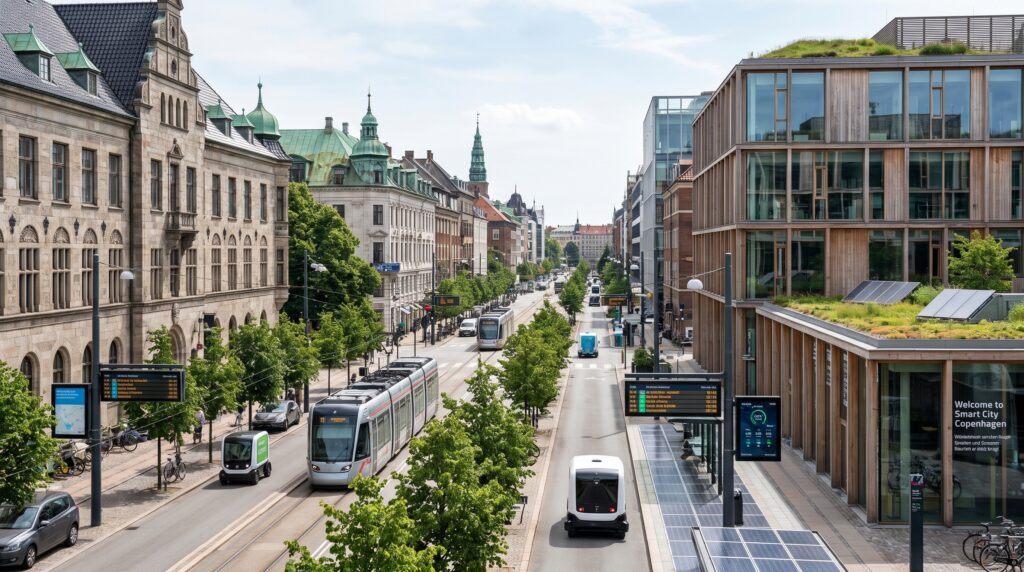
The future of Estonian real estate is no longer the sale of square meters, but the export of entire digital cities
Views: 56
The future of Estonian real estate is no longer the sale of square meters, but the export of entire digital cities
The Estonian real estate sector has so far been known as a domestic, small and stable market, where success is measured by the number of apartments sold and the growth in price levels. However, this picture is changing faster than most market participants think. The world is undergoing a transition from classic real estate development to a digital economy of future cities, where land, buildings and apartments are no longer the only values being sold. Instead, digital twins, AI-based urban planning, 3D cities and smart building data are being sold. As a small but exceptionally digitalized country, Estonia is in an unexpectedly good position to become not only a consumer, but also an export power in this transition.
Traditional model versus future model
The classic Estonian real estate chain is simple: land becomes a project, the project becomes construction, construction becomes an apartment, and the apartment becomes a saleable object. This model has worked for decades and continues to work, but the world's leading markets are already moving forward. In the model of the future, land first becomes a digital twin, then undergoes AI-based planning, becomes part of a 3D city, is sold virtually, is built as a smart building, and is managed data-driven from then on. The difference is not cosmetic — it is a completely new value chain, where technology companies earn revenue from every stage, not just the final product.
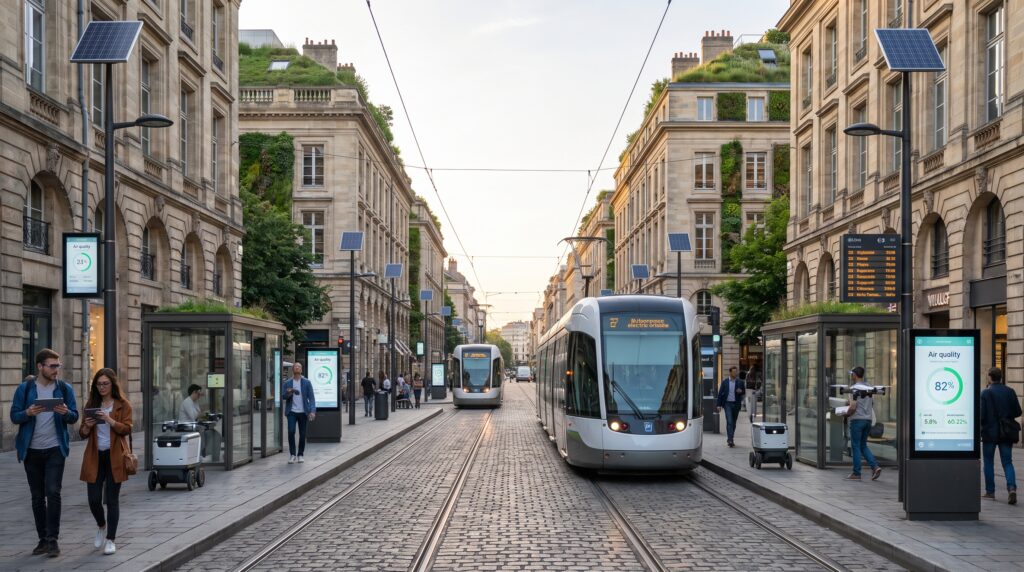
According to the European Commission, digital twins of cities are already being used in urban planning, transport, environmental and infrastructure management, but their widespread adoption is still in its early stages. This means that the market is not yet saturated and early adopters have a real opportunity to gain a foothold. The European smart-city market could reach around $408 billion by 2030, growing by an average of around 15% per year. This is a scale that even companies in a country the size of Estonia can realistically break into if the strategy is right.
Which markets are most realistic for Estonia?
Not all global markets should be treated the same. The most logical first step for Estonian companies is not the US or Asia, but Finland. Geographic proximity, a similar construction culture, a high level of digitalization and a strong real estate sector make Finland a market that is easier for Estonian companies to enter than, for example, the Middle East or America. In Finland, Estonia can offer AI-based real estate visualization, 3D apartments, AI interior design, BIM-based marketing and digital twins already today, without the need to create a completely new market.
The second logical step is the Nordic countries in general — Sweden, Denmark and Norway. These countries are internationally strong in the adoption of BIM and digital construction processes, which is why it is worth positioning Estonian companies not as a cheap subcontractor, but as a provider of “Nordic Future Real Estate Technology”. This branding completely changes the pricing logic — it is no longer a cheap service, but a strategic partnership.
Poland is one of the most interesting growth markets. The Polish digital twin market was estimated at $333 million and is expected to grow to approximately $2,15 billion by 2030, representing a CAGR of approximately 45%. In Poland, Estonian companies should not only compete with real estate developers — potential clients include city governments, architectural firms, construction companies, industrial parks and logistics companies, especially in cities such as Warsaw, Kraków, Wrocław, Gdańsk and Poznań.
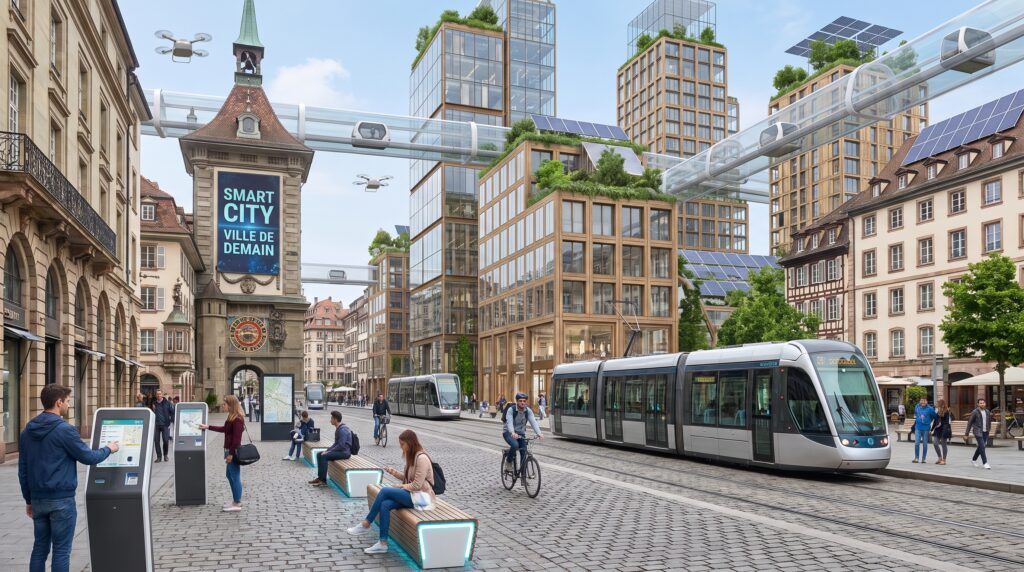
Germany represents the largest but most complex European opportunity, thanks to a combination of digital twin, BIM, AI and industrial real estate. The German digital twin market was estimated to be worth around $2,7 billion in 2025, while the construction IoT market could reach $4 billion by 2030. In this market, Estonian companies should position themselves as digital real estate technology providers, not just 3D visualization companies — this difference changes both the price level and the nature of the customer relationship.
The Middle East as a completely different playing field
Dubai and Saudi Arabia represent a different kind of opportunity. Dubai launched its Digital Twin Platform in 2026, which aims to use a digital city model in urban planning and decision-making, connecting it directly to property data and smart building systems through Dubai Municipality and the Dubai Land Department. This means that Dubai is rapidly moving towards a 3D model, property data, AI and city management that form a single entity that is directly accessible to the investor.
In Saudi Arabia, the game is even bigger. Several major urban projects are being developed under Vision 2030, including Riyadh, NEOM, Diriyah, Qiddiya and the Red Sea region. The smart-city technology market in Saudi Arabia has been estimated at 15-20 billion Saudi riyals per year, growing at an estimated 20-25% per year. This market is no longer selling a 3D image of an individual apartment, but a comprehensive “Future City Visualization System” type solution that combines a digital city model, AI, 3D visualization, investor experience and real estate sales into one.
Digital Twin for Real Estate as a separate export sector
The most interesting part of the strategy is the idea that Estonia could grow into a separate export sector called “Digital Twin for Real Estate”. Let’s imagine a developer building a new city district consisting of twenty buildings. An Estonian company can offer it the entire chain at once: a digital twin of the entire block, AI-based urban planning that analyzes sunlight, traffic, parking, green spaces, views and energy consumption, various AI architectural solutions, apartments turned into digital sales objects, a virtual city where the investor can freely move around the block, and later also a smart building solution that is connected to real data. The same client who would otherwise pay a few hundred euros for a 3D video can pay five to ten times more for such a comprehensive solution.
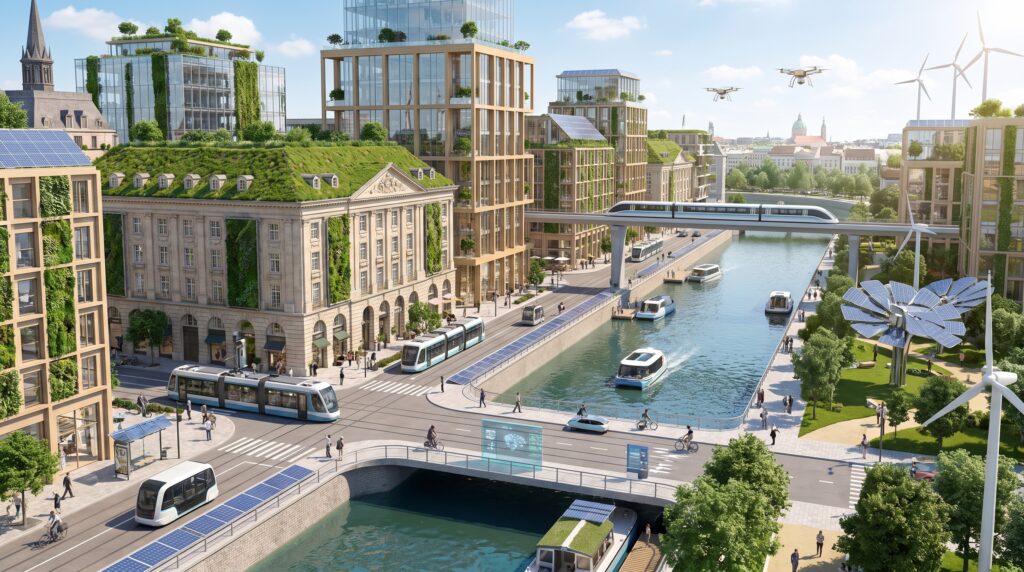
Where Estonia could reach by 2035
If Estonia can create a strong Future Real Estate Technology sector, the development could proceed in stages. In 2026–2028, the focus would be on the Baltics and Finland, where the sector’s annual turnover could be in the range of 5–20 million euros. In 2028–2030, the focus would expand to the Nordic countries, Poland and Germany, raising the potential to 50–150 million euros per year. In 2030–2035, wider Europe would be added, along with the United Arab Emirates, Saudi Arabia and the United Kingdom, which could bring the potential to 200–500 million euros and more. From 2035 onwards, there is already talk of a global Future City Technology market, where the potential could exceed a billion euros per year, assuming that Estonian companies sell complete platforms and infrastructure instead of individual services. These numbers are scenarios and a strategic assessment, not an official economic forecast, but they clearly show the scale of what is being talked about.
A realistic goal is not to capture a percentage of the entire global real estate market — that would be ambitious even for a major country. It makes much more sense to target a small but growing share of specific niches, such as 0,5–2% of the AI-based real estate marketing market, 0,1–0,5% of the building digital twin market, or 0,2–0,5% of the virtual real estate sales segment. For a small and highly digitized country, these figures are significantly more realistic than large global market shares.
Positioning is at the heart of strategy
For companies already operating in this field today — for example, AI-powered real estate visualization providers like 3DSingular — this means moving from a narrow definition of “AI 3D visualization for real estate” to a broader position: “AI-Powered Digital Real Estate & Future City Technology” or even more strongly “Building the Digital Layer of Future Cities”. Such a shift changes the nature of the product being sold. The price of a single video ranges from a few hundred to a couple of thousand euros, but a complete digital real estate system can cost from five to one hundred thousand euros, and the value of a complete digital city platform can range from one hundred thousand to one million euros and more.
The European Commission is clearly moving in the direction where local digital twins, AI, 3D, IoT and city data become part of a common European infrastructure, with digital-twin components created in one Member State planned to be used across the entire European single market. This is an extraordinary opportunity for Estonia, because Estonia does not have to try to build the next Dubai — instead, Estonia can build the technology with which Dubai, Helsinki, Stockholm, Warsaw, Berlin and Riyadh will digitally plan and sell their cities of the future.
Summary
The future of the Estonian real estate sector no longer lies solely in construction volumes or square meters, but in the ability to export digital infrastructure, with which other countries plan, visualize and sell their cities. Finland, Sweden, Poland, Denmark, Norway, Germany, Dubai and Saudi Arabia form a realistic and phased list of target markets where Estonian companies can move from providing individual visualization services to creating entire digital city platforms. This is a strategy that requires patience and gradual positioning, but the end point of which is no longer the sale of an apartment, but the construction of the digital layer of the cities of the future.